
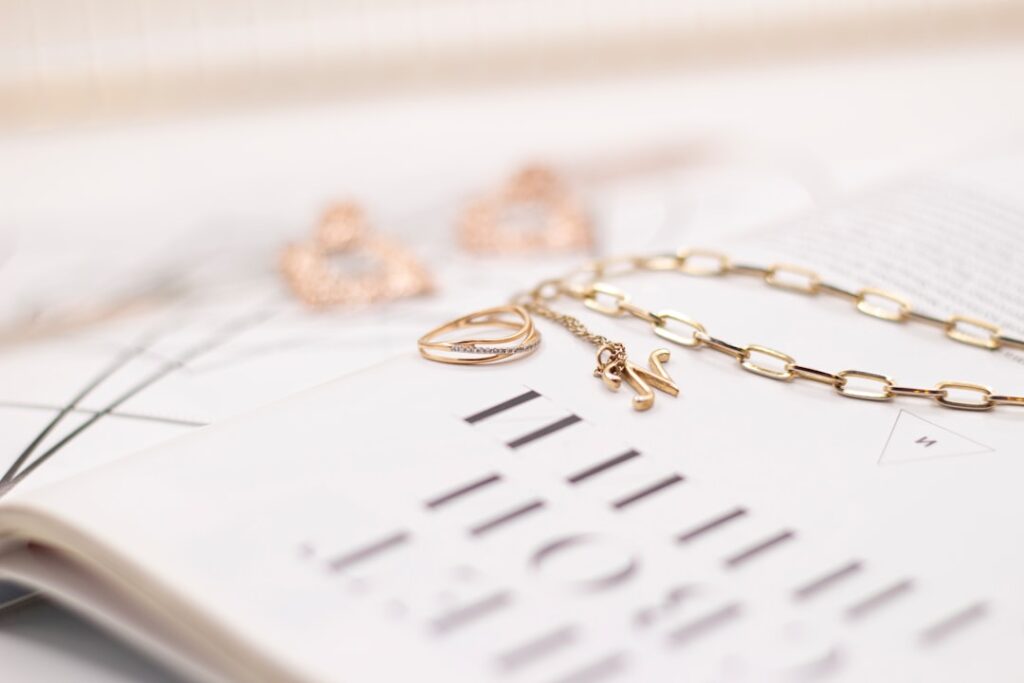
Jewelry, in its myriad forms, has captivated humanity since the dawn of civilization. Far from mere aesthetic embellishments, these objects often transcend their material composition, embodying cultural narratives, historical milestones, and personal expressions. From prehistoric shells strung on animal hide to the meticulously crafted haute joaillerie of contemporary designers, the enduring allure of jewelry lies in its multifaceted roles as an art form, a symbol, and an investment. This article explores the historical trajectory, cultural significance, and evolving artistry of jewelry, examining its profound impact on human society.
A Glimpse into Antiquity: Jewelry’s Earliest Manifestations
The origins of jewelry are deeply rooted in the primordial human desire for self-expression and adornment. Early human societies, long before the advent of complex metallurgy, utilized readily available natural materials to create rudimentary forms of ornamentation.
Prehistoric Adornment: The First Strokes of Style
Archaeological evidence indicates that humans were adorning themselves with jewelry as early as the Stone Age. These initial pieces were often crafted from bone, shell, teeth, and polished stones, strung together to form necklaces, bracelets, and hair ornaments.
The Oldest Known Jewelry: A Glimpse into Early Sophistication
The Blombos Cave in South Africa, for instance, has yielded perforated Nassarius snail shells dating back approximately 75,000 years, suggesting their use as personal adornment. Similarly, Gravettian sites in Europe have uncovered elaborate ivory beads and pendants, hinting at a developed aesthetic sensibility among our ancient ancestors. These early forms of jewelry served not only as personal adornment but also likely held symbolic or ritualistic significance, perhaps indicating status within a group or serving as amulets for protection.
Ancient Civilizations: Ritual, Power, and Beauty
With the rise of complex civilizations, the art of jewelry making witnessed a significant evolution. The development of metallurgy allowed for the manipulation of precious metals, transforming raw materials into objects of intricate beauty and profound cultural weight.
Egyptian Masterpieces: A Symphony of Gold and Gemstones
Ancient Egypt stands as a testament to the early mastery of jewelry crafting. Gold, a metal associated with divinity and eternity, was extensively employed to create a vast array of ornaments, including elaborate collars, pectorals, rings, and amulets. Gemstones such as lapis lazuli, turquoise, and carnelian were meticulously incorporated, each color imbued with specific symbolic meaning. Jewelry in ancient Egypt served not only as personal decoration for both the living and the deceased but also as potent symbols of status, religious belief, and royal authority.
Mesopotamian and Indus Valley Innovations: The Dawn of Complex Techniques
In Mesopotamia, renowned for its sophisticated urban centers, jewelers developed advanced granulation and filigree techniques, creating intricate designs on gold and silver. Cylinder seals, often crafted from precious stones and worn as pendants, functioned both as identification and as artistic expressions. Similarly, the Indus Valley Civilization produced a diverse range of jewelry, including bead necklaces, gold earrings, and shell bangles, showcasing a rich artistic tradition. These early civilizations laid the groundwork for the future development of jewelry, establishing techniques and symbolic frameworks that would resonate throughout history.
The Evolution of Craftsmanship: From Ancient Techniques to Modern Innovations
The history of jewelry is inextricably linked to the advancement of metallurgical and lapidary skills. Over millennia, artisans have refined existing techniques and pioneered new ones, constantly pushing the boundaries of what is possible in the creation of these miniature works of art.
Medieval Opulence and Renaissance Refinement: A Flourishing of Artistry
The medieval period saw jewelry continue its role as a status symbol, with precious metals and elaborate designs signifying wealth and power. The Renaissance, however, brought a renewed emphasis on artistic detail and narrative within jewelry.
Gothic and Renaissance Jewelry: Portraying Faith and Humanism
Gothic jewelry often featured religious motifs and intricate enamel work, while the Renaissance saw a surge in allegorical and mythological designs. Portraits set within lockets, often depicting loved ones or admired figures, became popular. The rediscovery of classical art forms influenced jewelry design, leading to a more refined aesthetic and a greater appreciation for sculptural elements. Jewelers of this era demonstrated exceptional skill in gem cutting and setting, transforming raw stones into sparkling facets.
The Industrial Revolution and Mass Production: Accessibility and New Materials
The Industrial Revolution, while revolutionizing many industries, also had a significant impact on jewelry production. The advent of new machinery and manufacturing processes allowed for the mass production of jewelry, making it more accessible to a wider demographic.
The Rise of Costume Jewelry: Democratizing Adornment
This era witnessed the rise of costume jewelry, crafted from less precious materials like brass, copper, and glass, yet often designed to mimic the appearance of fine jewelry. While some purists viewed this as a decline in artistry, it undeniably democratized adornment, allowing individuals of all social strata to partake in the pleasure of wearing jewelry. New materials and plating techniques enabled designers to experiment with bold new styles, paving the way for the diverse jewelry landscape of the 20th century.
Cultural Significance: jewelry as a Narrative of Identity and Belief
Beyond its aesthetic appeal, jewelry consistently serves as a powerful medium for conveying cultural values, historical narratives, and individual identity. Its symbolic weight often transcends its material value, becoming an intrinsic part of social rituals and personal expression.
Symbolic Meanings: Jewelry as a Language
Across cultures and throughout history, specific types of jewelry, materials, and motifs have been imbued with profound symbolic meaning. These symbols often communicate social status, marital state, religious affiliation, or protective properties.
Amulets and Talismans: Guardians Against the Unseen
Many cultures have traditionally utilized jewelry as amulets or talismans, believed to ward off evil, bring good fortune, or provide healing properties. The ancient Egyptian ankh, for example, symbolized life, while various gemstones were associated with different planets or virtues. Wearing a specific piece of jewelry could convey protection or invoke a desired outcome, illustrating the deeply ingrained belief in the power of adornment beyond mere aesthetics.
Status and Affiliation: A Visual Hierarchy
Jewelry has historically played a crucial role in denoting social status and group affiliation. Tribal societies often use elaborate beadwork or metal ornaments to distinguish leaders, warriors, or shamans. In monarchical societies, crowns, scepters, and ceremonial jewels served as undeniable markers of royal authority and divine right. Even today, a wedding ring symbolizes marital commitment, while specific fraternity or sorority pins indicate membership and shared identity. These objects become visual cues within a social landscape, communicating volumes without a single word.
Regional Variations: A Kaleidoscope of Styles
Different cultures and geographical regions have developed distinct jewelry traditions, reflecting their unique artistic sensibilities, available resources, and belief systems. This diversity showcases the boundless creativity of human craftsmanship.
African Adornment: Expression and Community
African jewelry, for instance, is renowned for its vibrant colors, intricate beadwork, and use of natural materials such as wood, shells, and animal teeth. Often crafted by hand, these pieces carry significant cultural weight, frequently serving as indicators of age, marital status, or tribal affiliation. Necklaces, bracelets, and body adornments are not merely decorative but integral to ceremonies, rites of passage, and daily life, reflecting a deep connection to community and heritage.
Asian Aesthetics: Harmony and Symbolism
Asian jewelry traditions, particularly in China and India, are characterized by their rich symbolism, intricate craftsmanship, and use of precious metals and gemstones. Chinese jade, revered for its beauty and perceived spiritual qualities, has been incorporated into jewelry for millennia. Indian jewelry often features elaborate gold designs, often combined with precious stones like rubies, emeralds, and diamonds, and plays a vital role in religious ceremonies and marital traditions. These regional variations underscore the role of jewelry as an echo of distinct cultural narratives and artistic practices.
The Art of Gemstones: Nature’s Miniature Sculptures
Gemstones, with their mesmerizing colors, sparkling brilliance, and inherent rarity, are central to the allure of much fine jewelry. Formed over millennia deep within the Earth, each stone tells a geological story, and when skillfully cut and polished, they transform into miniature sculptures that captivate the eye.
The Four C’s: Evaluating Gemstone Quality
The value and beauty of a gemstone are typically assessed based on “the Four C’s”: Carat, Cut, Color, and Clarity. These standardized criteria provide a framework for evaluating a gem’s individual characteristics.
Carat: The Weight and Size Factor
Carat refers to the weight of a gemstone, with one carat equivalent to 200 milligrams. While a larger carat weight generally indicates a more valuable stone, it is not the sole determinant of value. The interplay of all four C’s ultimately dictates a gem’s worth and desirability.
Cut: The Light-Capturing Artistry
The cut of a gemstone is arguably the most crucial factor in determining its brilliance and sparkle. A well-executed cut maximizes a stone’s ability to reflect and refract light, unleashing its inherent fire and scintillation. This facet of gemology involves precise angles and proportions, transforming a rough stone into a dazzling masterpiece.
Color: The Spectrum of Beauty
The color of a gemstone is often its most striking feature. From the intense blues of a sapphire to the fiery reds of a ruby and the verdant greens of an emerald, color plays a significant role in a gem’s appeal and value. Slight variations in hue, tone, and saturation can dramatically impact a stone’s desirability and price.
Clarity: The Purity of the Stone
Clarity refers to the absence of internal inclusions (blemishes within the stone) and external characteristics (surface imperfections). While completely flawless gemstones are exceedingly rare, clarity affects how light passes through the stone, influencing its brilliance and overall appearance. Understanding these fundamental principles allows for a more informed appreciation of a gemstone’s inherent beauty and value.
Famous Gems: Legends and Legacies
Throughout history, certain gemstones have risen to prominence, becoming legendary for their exceptional size, historical significance, or captivating beauty. These famous gems often have intricate narratives woven around their origins and ownership.
The Hope Diamond: A Tale of Intrigue and Brilliance
The Hope Diamond, a deep blue, 45.52-carat stone, is perhaps one of the most famous and notoriously “cursed” gemstones in the world. Its storied history includes ownership by French kings, subsequent theft during the French Revolution, and a series of ill-fated owners before its eventual donation to the Smithsonian National Museum of Natural History. Its captivating color and dramatic past make it a global icon of gemological splendor.
The Cullinan Diamond: A Behemoth of Magnificence
The Cullinan Diamond, discovered in 1905, remains the largest gem-quality rough diamond ever found, weighing an astonishing 3,106 carats. It was subsequently cut into nine major stones and 96 smaller brilliants, with the two largest, the Great Star of Africa and the Lesser Star of Africa, now adorning the British Crown Jewels. Such extraordinary gemstones transcend mere material value, becoming enduring symbols of historical power and natural wonder.
Modern Jewelry: Innovation, Sustainability, and Personal Expression
The contemporary jewelry landscape is characterized by a dynamic blend of tradition and innovation. Designers are constantly exploring new materials, techniques, and concepts, while consumers increasingly seek pieces that reflect their personal style and ethical values.
Technological Advancements in Design and Production
The 21st century has seen significant technological advancements that have revolutionized jewelry design and production, offering unprecedented possibilities for complexity and customization.
3D Printing and CAD Software: From Concept to Creation
Computer-aided design (CAD) software and 3D printing have transformed the jewelry industry. Designers can now create intricate and highly detailed prototypes with remarkable precision, allowing for greater experimentation and faster iteration cycles. This technology has also opened doors for custom design, enabling individuals to translate their visions into tangible, personalized pieces. The ability to visualize and manipulate designs in a virtual environment before physical production has streamlined the creative process significantly.
Lab-Grown Diamonds and Ethical Sourcing: A Conscientious Choice
The rise of lab-grown diamonds and a greater emphasis on ethical sourcing have emerged as significant trends in modern jewelry. Lab-grown diamonds, chemically and optically identical to their mined counterparts, offer a sustainable and often more affordable alternative. Consumers are also increasingly concerned about the provenance of their gemstones and metals, leading to a demand for transparent supply chains and certified ethically sourced materials. This shift reflects a growing consciousness within the industry and among consumers regarding the environmental and social impact of jewelry production.
The Resurgence of Customization and Personalization
In an increasingly mass-produced world, the desire for unique and personally meaningful objects has led to a strong resurgence in custom jewelry and personalization.
Bespoke Pieces: Crafting Uniqueness
Bespoke jewelry, handcrafted to a client’s specific vision, allows for unparalleled individuality. From engagement rings tailored to a couple’s unique story to heirloom pieces redesigned for a new generation, custom work emphasizes craftsmanship and personal connection. This trend reflects a movement away from generic consumption towards a curated approach to personal style and expression.
Wearable Technology and Smart Jewelry: Form Meets Function
The intersection of technology and jewelry has given rise to “smart jewelry,” which integrates functional capabilities into elegant designs. These pieces can monitor health metrics, facilitate contactless payments, or provide notifications, blurring the lines between fashion accessory and practical gadget. While still an emerging field, smart jewelry represents a bold new frontier, demonstrating how adornment can evolve to meet the demands of a technologically advanced world.
In conclusion, jewelry, from its ancient origins to its contemporary manifestations, remains a profound and enduring aspect of human culture. It serves as a historical archive, a canvas for artistic expression, a symbol of identity, and a testament to human ingenuity. Its timeless allure lies not merely in its inherent beauty or material value, but in its capacity to narrate stories, convey emotions, and connect us to our past, present, and future. As our world continues to evolve, so too will the forms and functions of jewelry, yet its fundamental power to captivate and communicate will undoubtedly persist.
FAQs
What are the most common materials used in jewelry?
Jewelry is commonly made from materials such as gold, silver, platinum, diamonds, pearls, and various gemstones. Other materials include stainless steel, titanium, and synthetic stones.
How is the value of jewelry determined?
The value of jewelry is determined by factors such as the type and quality of materials used, craftsmanship, brand, design, rarity, and market demand. Precious metals and gemstones typically increase the value.
What are the different types of jewelry?
Jewelry types include rings, necklaces, bracelets, earrings, brooches, and pendants. Each type can vary widely in style, size, and material.
How should jewelry be cared for and maintained?
Jewelry should be cleaned regularly with appropriate methods depending on the material, stored in a dry place, and handled carefully to avoid scratches or damage. Professional cleaning and inspections are recommended for valuable pieces.
What are some popular jewelry styles or trends?
Popular jewelry styles include classic, vintage, minimalist, bohemian, and statement pieces. Trends often change with fashion, but timeless designs like solitaire diamond rings and pearl necklaces remain popular.