
Key Takeaways
- Building a custom home from planning to completion typically takes 9 to 18 months.
- The timeline is divided into pre-construction, structural work, interior finishes, and post-construction phases.
- Design complexity, permitting requirements, weather, and supply chains are the biggest variables that impact completion schedules.
Embarking on the journey of building a new home comes with anticipation and many decisions along the way. Whether you are new to the process or simply looking for clarity, understanding the general timeline will help manage expectations and reduce uncertainty. For anyone considering construction projects in Brunswick, GA, knowing the duration of each phase is essential for effective planning and budgeting.
The construction process comprises several distinct stages. Each phase has its own set of tasks and potential challenges, all of which contribute to the overall timeline. By breaking down these phases and identifying common delays, you can approach the process with greater confidence and preparation. Before the physical build begins, several months can be spent in the design and approval phase. Once ground breaks, weather and the complexity of your property can all play roles in determining how quickly or slowly things move. With informed planning and real-time adjustments, most homeowners can achieve a smooth experience. Early decisions about layout, finishes, and the construction team will influence the entire process. At this point, it is also wise to familiarize yourself with home design considerations to ensure your final build aligns with your vision and lifestyle.
Pre-Construction Phase
Long before any materials are delivered or foundations are poured, the pre-construction stage begins. This critical period involves intensive collaboration with architects, refining ideas, and obtaining all necessary permits before construction can legally begin. Detailed planning can help avoid cost overruns and schedule slip-ups down the line.
Design and Planning
Owners partner with architectural and design teams to develop blueprints and make choices about major systems and finishes. Some homeowners invest additional time in this phase, as thorough preparation now leads to smoother progress later.
Permitting and Approval
Local municipalities set requirements for construction permits. Obtaining these permits often involves submitting engineered plans and participating in reviews. The approval process can require weeks or even months, particularly if modifications are needed to meet code or zoning needs. Close attention here ensures there are no regulatory surprises later.
Structural Work
With designs finalized and permits in hand, site work commences. This includes clearing and grading the land, setting up temporary utilities, and preparing the ground for the foundation. Substantial work goes into each of the following:
- Site Preparation: Clearing vegetation, excavation, and bringing in resources like power and water.
- Foundation: Pouring concrete and allowing proper curing to ensure stability for the structure above.
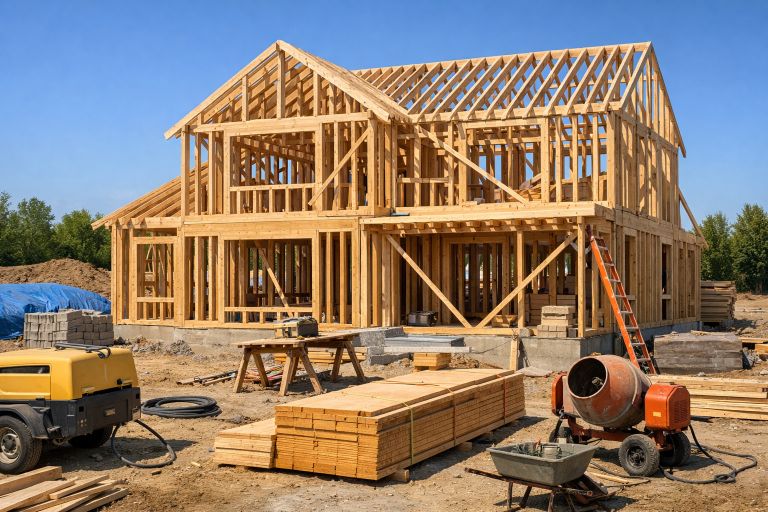
- Framing: Erecting the basic skeleton, including installation of walls, roof trusses, and basic subfloors.
Weather interruptions or labor shortages may slow progress at this stage, with site conditions and regional climate as major variables.
Interior Finishes
As the exterior of the house nears completion, crews move indoors to address wiring, plumbing, insulation, and drywall. Careful coordination is required between specialty contractors as electrical and mechanical systems are installed, followed by the finishing touches.
- Electrical and Plumbing: Rough-ins for both systems are completed before insulation and drywall are added.
- Insulation and Drywall: Providing energy efficiency and a polished look.
- Flooring and Cabinetry: The aesthetic transformation is completed as floors, cabinetry, and paint finishes are applied.
Change orders or material delays can extend this part of the timeline. Transparent communication with your builder ensures any unexpected holdups are quickly addressed.
Post-Construction Phase
Once all major work is finished, attention turns to quality control and regulatory compliance. Final inspections are scheduled to verify that the build complies with all required codes. The punch list walk-through is the last opportunity to address minor repairs before the home is officially handed over.
- Final Inspections: Ensuring the property passes all required safety and code requirements.
- Landscaping: Completing driveways, walkways, grass, and gardens to finish the exterior.
- Walkthrough and Handover: Owners meet with the builder for a comprehensive review and key transfer.
This phase typically takes several weeks, depending on the extent of landscaping and any remaining punch list items.
Factors Influencing the Timeline
No two custom homes are the same, and project timelines reflect this individuality. Complex home designs, elaborate finishes, or custom features often demand extra time and craftsmanship. Geographical differences also mean that permitting requirements may be more detailed in one region than another, adding weeks to approvals. Inclement weather remains one of the greatest risks to a tight construction schedule, especially in regions prone to heavy rains or storms.
- Unique designs or specialty materials can extend the build period.
- Certain seasons or extreme weather events may pause outdoor work.
- Fluctuations in supply chains sometimes result in delays in securing necessary construction materials.
Conclusion
Achieving your dream home requires careful planning and adaptability at each step. By recognizing the construction stages and understanding the factors likely to affect the timeline, you can stay informed and make timely decisions. Regular communication with your team and remaining aware of potential bottlenecks will go a long way in ensuring a successful outcome for your construction project.